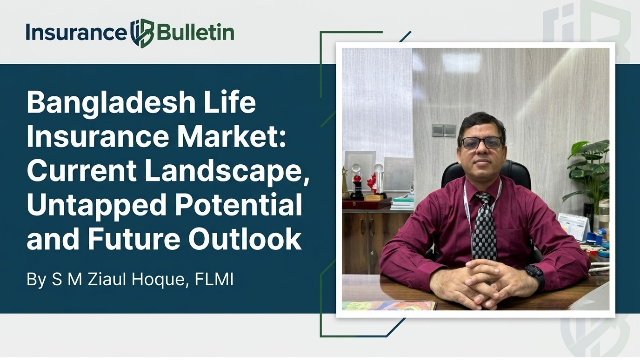
S M Ziaul Hoque, FLMI: The life insurance (36 Companies) market generated approximately BDT 12,000 crore (Tk. 120 billion) in annual premium income in 2025, representing nearly two-thirds of the country's total insurance premiums. Life insurers collectively manage a life fund exceeding BDT 34,000 crore, demonstrating the sector's growing role in long-term savings mobilization.
However, Bangladesh remains one of the least insured countries in Asia. Insurance penetration (insurance premiums as a percentage of GDP) remains below 1%, substantially lower than the global average of around 7% and below many emerging Asian economies. Insurance density (premium per capita) also remains among the lowest in the region. These indicators reveal enormous room for expansion rather than market saturation.
Untapped Opportunities
Several structural factors position Bangladesh for sustained growth in life insurance:
Large uninsured population: With a population exceeding 170 million, only a fraction possesses formal life insurance coverage.
Growing middle class: Rising disposable income is increasing demand for long-term savings, education planning, retirement products and family protection.
Financial inclusion agenda: Expansion of mobile financial services and digital payment platforms creates opportunities for low-cost digital insurance distribution.
Microinsurance: More than 60% of Bangladesh's workforce operates in the informal economy, while millions of low-income households remain uninsured. Affordable microinsurance products can significantly improve financial resilience.
Demographic dividend: Bangladesh's young population provides a large future customer base for long-term life insurance and pension-oriented products.
Bancassurance and embedded insurance: Recent regulatory reforms enabling bancassurance create opportunities to leverage Bangladesh's extensive banking network for insurance distribution.
Future Outlook
The long-term outlook for Bangladesh's life insurance market remains highly positive. Continued economic growth, urbanization, digital transformation, increasing financial inclusion, regulatory modernization and the development of inclusive insurance products are expected to drive strong market expansion over the next decade.
If Bangladesh gradually raises insurance penetration even to 2-3% of GDP, the life insurance market could potentially more than triple in size, mobilizing substantial long-term domestic savings for infrastructure investment, capital market development and broader economic growth. A stronger life insurance sector would also contribute significantly to household financial security, poverty reduction and achievement of the Sustainable Development Goals (SDGs).
In summary, Bangladesh's life insurance industry represents a classic "high-potential, low-penetration" market. With appropriate regulatory reforms, enhanced consumer protection, digital innovation, effective distribution channels and expanded microinsurance coverage, the sector is well-positioned to become a major pillar of Bangladesh's financial system and inclusive economic development over the coming decade.